Chronic Illness, Body Image and Online Eating Disorder Support That Fits Real Life
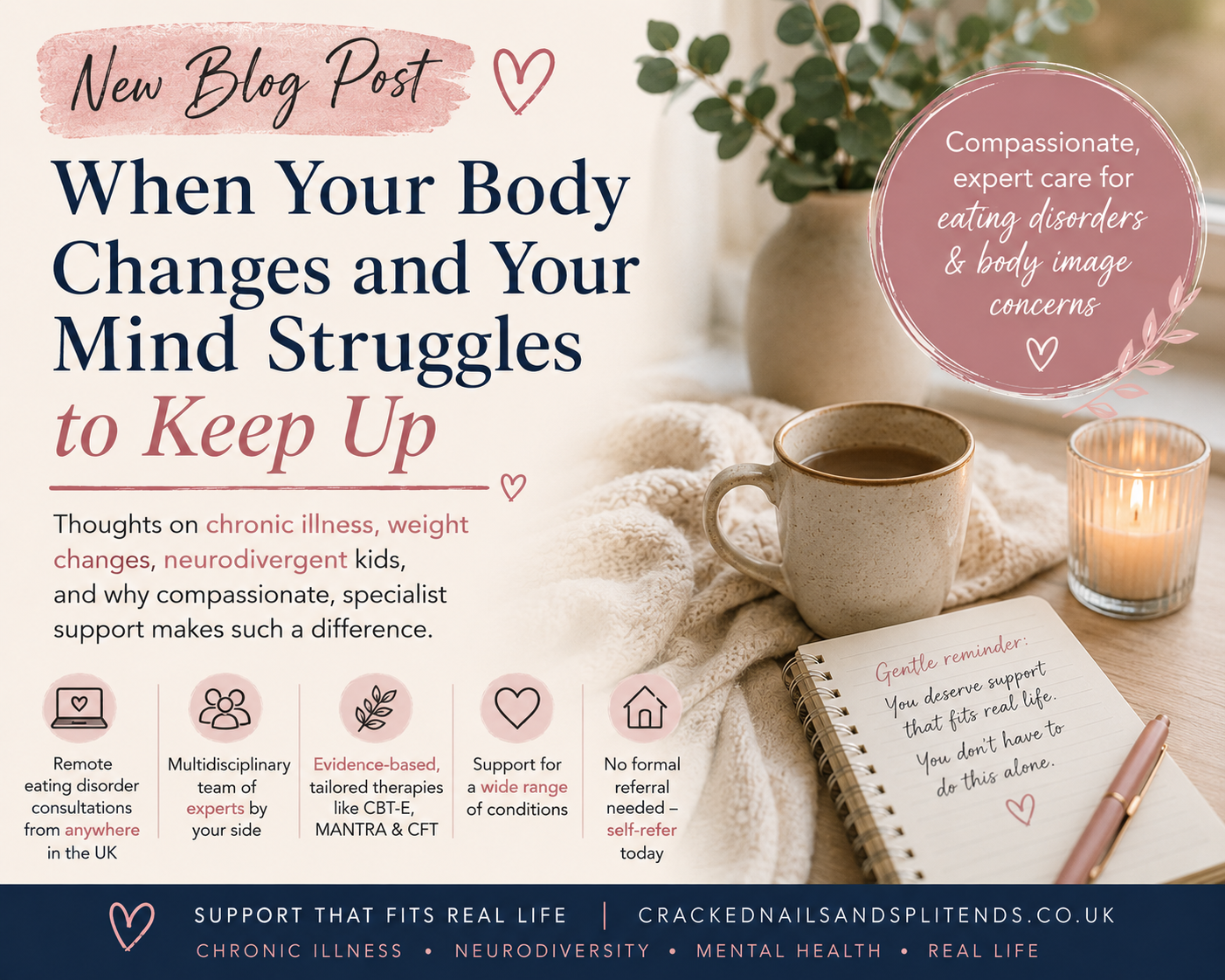
When Your Body Changes and Your Mind Struggles to Keep Up
Living with chronic illness changes so much more than just your body.
That sounds obvious, I know, but it is something I do not think people fully understand unless they are living it. When your body stops moving the way it used to, when pain becomes part of the background noise of your day, and when medication starts solving one problem while creating another, it can really affect how you feel about yourself.
For me, weight has been one of those difficult areas. Not because of disordered eating, but because of circumstance. Less movement. Being unable to exercise the way I once could. Medication side effects that have caused weight gain. Fatigue that makes even small things feel like climbing a mountain.
It changes how you see yourself. It changes how your clothes fit, how you feel when you catch yourself in the mirror, and sometimes how comfortable you feel in your own skin. That can be hard to talk about.
Chronic illness and body image are more connected than people realise
I think body image conversations often get boxed into very narrow spaces, social media, diet culture, and weight loss. But for people living with chronic illness, it can feel very different. It can be grief. Grief for the body you had. Grief for the routines you lost. Grief for the freedom to move without thinking about it.
I think a lot of us carry that quietly.
Sometimes people assume weight gain is simple. Eat less, move more. That old line. But when movement hurts, when medication impacts metabolism, and when energy is already in short supply, it is never that straightforward. That does not mean the emotional impact is any less real.
The overlap between food, control, and isolation
I understand how easily food and control can become tangled together, especially when life already feels limited. Chronic illness can be incredibly isolating. There is a lot of time spent alone, a lot of waiting, and a lot of being in your own head through appointments, rest days, recovery days, and flare days.
That isolation can create space for unhealthy thought patterns to grow. Food can become comfort. Food can become control. Food can become anxiety. For some people, that develops into something much deeper. That is why conversations around eating disorders matter, not because they are always obvious, but because they often are not.
Food struggles can look different in neurodivergent families too
This is something I have seen at home as well. For my neurodivergent child, food is complicated and often visual. How food looks matters just as much as how it tastes. If something looks “wrong” or unfamiliar, it can be an immediate no.
That can be frustrating at times, but it has also taught me that food relationships are rarely simple. For neurodivergent children especially, sensory preferences, visual presentation, routine, and predictability all play a part. It has also made me more aware of body image anxieties in younger people. Those worries can start far earlier than many of us realise.
Why specialist support matters
This is why I think specialist support matters so much. Not every struggle with food or body image means an eating disorder, but when it does, or when it starts heading that way, having access to the right help can make all the difference.
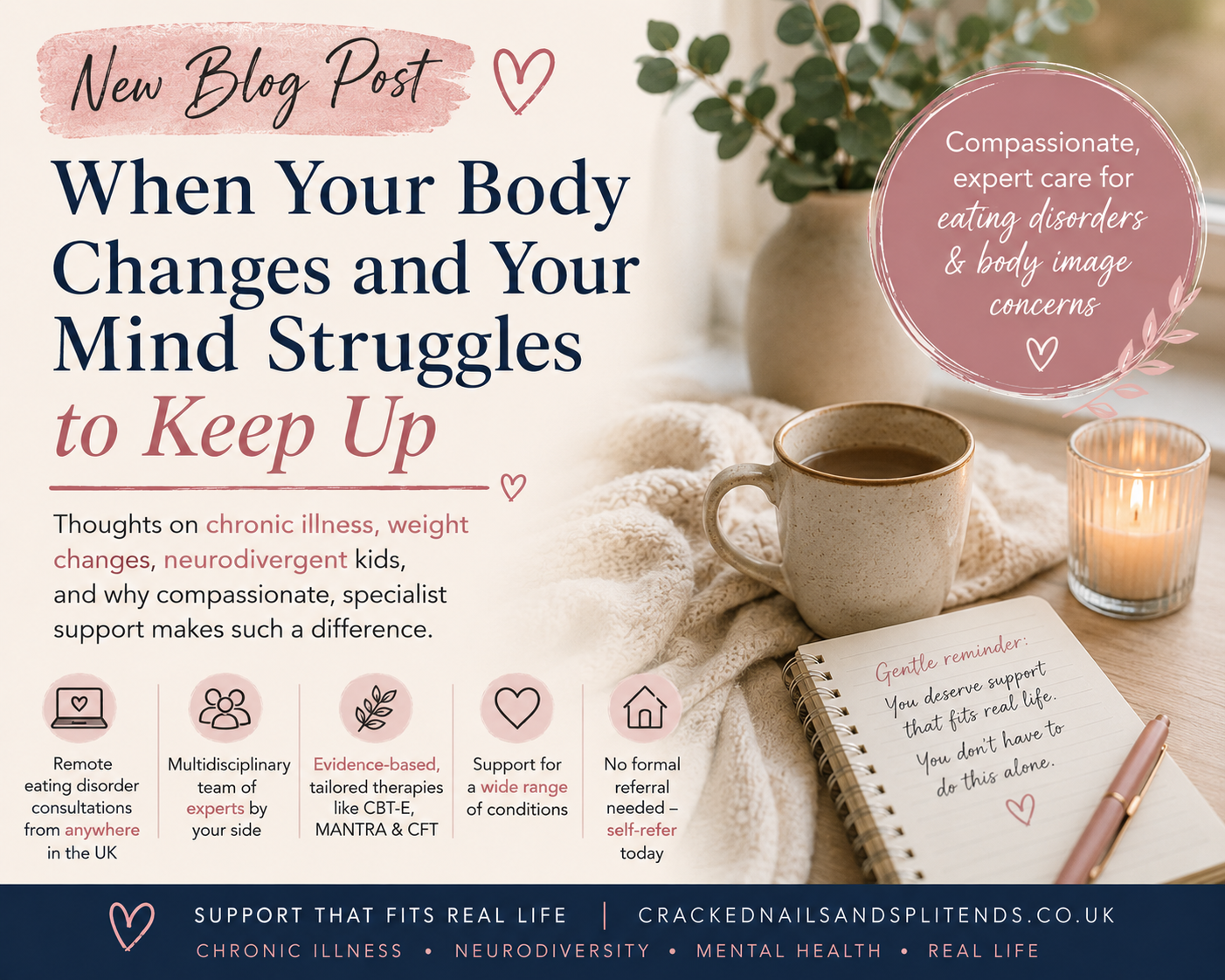
What stands out to me about The London Centre is that support is not one size fits all. Their online eating disorder therapy offers fully remote consultations, making specialist support accessible from anywhere in the UK.
Because if there is one thing I know from living with chronic illness, accessibility can often be the thing that decides whether you ask for help or keep putting it off. Being able to access remote eating disorder consultations from home removes so many barriers:
Travel and transportation logistics
Physical energy depletion
Time constraints
Heightened anxiety
Sometimes just getting through the front door can feel like enough for one day. Having support come to you can make that first step feel a little more manageable, especially when life already feels heavy enough.
A team that understands the bigger picture
Another thing that feels important is that their treatment is multidisciplinary. This means your care team is highly specialised and can involve:
Clinical Psychologists and Psychiatrists
Dietitian’s
Occupational Therapists
That makes sense to me because eating disorders and body image struggles rarely exist in isolation. They often sit alongside anxiety, depression, trauma, neurodivergence, and chronic health conditions. The bigger picture matters. I think sometimes people just want to be seen fully, not as a diagnosis, a weight, or a symptom list, but just as a whole person.
There is no “right enough” point to ask for help
I think one of the hardest things in mental health is knowing when to ask for support. People wait. They minimise. They compare. They convince themselves someone else has it worse. I have done that in other areas of my life more times than I can count.
But struggling is struggling, whether that is with body image, food, anxiety, or something harder to name.
The London Centre provides specialized, evidence-based treatments tailored to the individual using proven frameworks like CBT-E, MANTRA, and Compassion Focused Therapy. They offer support for a wide range of conditions, including:
Anorexia Nervosa
Bulimia Nervosa
Binge Eating Disorder
ARFID (Avoidant Restrictive Food Intake Disorder)
Body Dysmorphia
Importantly, there is no formal referral needed. Individuals, parents, and carers can easily self-refer to start their recovery journey, which makes the entire process feel a little less daunting and a lot more accessible.
Final thoughts
I think what I keep coming back to is this: bodies change. Sometimes because of illness, sometimes because of medication, and sometimes because life throws things at us that alter everything. That can be hard to sit with.
And while not every difficult relationship with food or body image is an eating disorder, it still deserves compassion. It still deserves understanding. For those who are struggling more deeply, access to specialist, evidence based support matters, especially when it fits into real life.
Because real life is rarely neat. It is messy, exhausting, unpredictable, and sometimes lonely. Support should meet people there. Not the polished version of them, but the real version. The one trying to get through the day.
About me
I am a married mother of four children. One of those four children is our granddaughter, for whom we are SGO (legal guardians)/kinship carers. I run a small business and enjoy writing, so I blog. My blog focuses on my family life as well as my experiences of living with chronic illnesses and disabilities such as ME/CFS, spinal stenosis, chronic pain, and fibromyalgia. Oh, and I am only in my mid-40s.
Frequently Asked Questions
-
No, you do not need a formal GP or specialist referral. Individuals, parents, and legal guardians can easily self-refer directly through The London Centre’s website to begin their recovery journey.
-
Yes. The London Centre provides comprehensive online therapy and remote consultations, making our specialist eating disorder services fully accessible from anywhere in the UK.
-
Their multidisciplinary team provides tailored support for a wide range of conditions, including Anorexia Nervosa, Bulimia Nervosa, Binge Eating Disorder, ARFID (Avoidant Restrictive Food Intake Disorder), and Body Dysmorphia.
-
The London Centre utilise proven, evidence-based frameworks customised to your individual needs, including CBT-E (Enhanced Cognitive Behavioural Therapy), MANTRA (Maudsley Anorexia Nervosa Treatment for Adults), and Compassion Focused Therapy (CFT).
-
The London Centre’s remote care team is highly specialised and, depending on your needs, may involve Clinical Psychologists, Psychiatrists, Dietitian, and Occupational Therapists working together to support the whole person.
Disclaimer: I am not a qualified expert. This FAQ is based on my own experiences as a parent and what I have learned while raising my child. It reflects personal insight, not professional advice.