13 Aid Items I Pack for a Holiday Living with ME CFS and Fibromyalgia
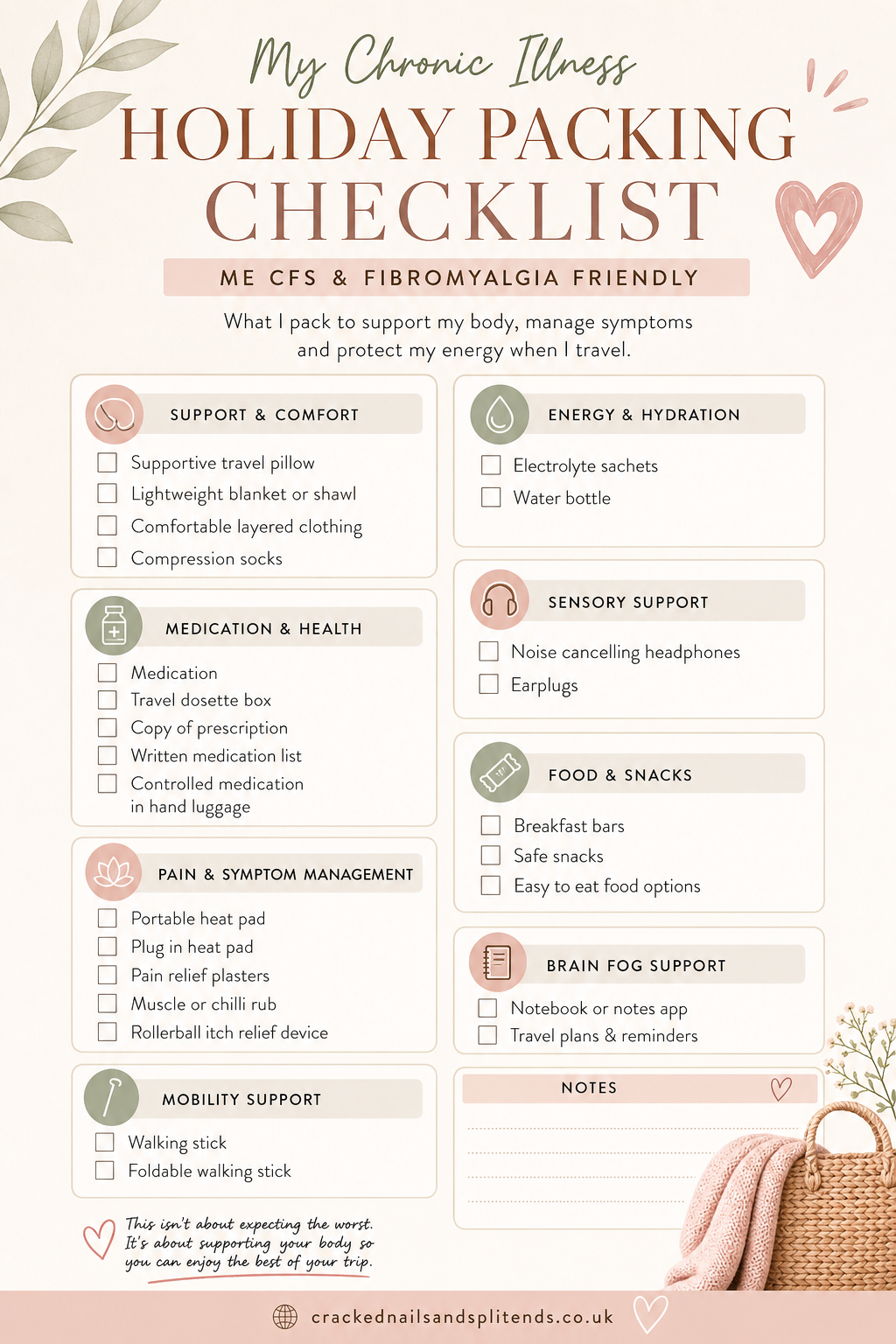
Holidays now come with planning, pacing, and a fair amount of trial and error.
When you live with ME CFS and fibromyalgia, you do not just pack clothes and toiletries. You pack for energy management, pain relief, sensory regulation, and the unpredictability that comes with chronic illness. Over the years, I have refined what I bring, and these are the items I now consider essential.
This is not about overpacking. This is about giving myself the best chance at actually enjoying some part of the holiday.
1. A Travel Pillow That Actually Supports Me
Not the flimsy kind you grab at the airport. I mean a proper supportive travel pillow that keeps my neck stable. Neck pain for me can quickly spiral into headaches and full body fatigue. If I am travelling by car or plane, this is non negotiable.
I also use it far more than just for the journey. It comes out on sun beds, hotel beds, even sofas that do not quite support me properly. Having that familiar support with me means I am not relying on whatever is available, which rarely works for my body.
This also links closely to how I manage flare ups, something I talk about in my post on managing post-exertional malaise, because even a short journey can trigger symptoms.
2. A Lightweight Blanket or Shawl
Temperature regulation is something I constantly struggle with. I can go from freezing to overheating within minutes. A soft blanket or shawl gives me control over that without relying on whatever is available where I am staying.
It also doubles as a comfort item. There is something grounding about having something familiar when everything else feels unfamiliar.
3. Electrolytes and Hydration Support
Hydration is not just about drinking water. For me, electrolytes help with dizziness, fatigue, and that shaky feeling that can come out of nowhere.
I always pack sachets so I do not have to rely on finding them while I am away. This ties into energy management, which I explore more in my daily routines and chronic illness coping strategies posts.
4. My Medication and a Backup Plan
This sounds obvious, but I have learned to go a step further. I bring more than I need, and I split it between bags where possible.
I always include a copy of my prescription as well, especially when travelling, as it gives me peace of mind if I am ever asked about what I am carrying.
Anything containing a controlled drug stays in my hand luggage. I never risk putting essential medication in checked bags where it could be lost or delayed.
I keep a written list of my medication too, just in case. Brain fog is real, especially when I am out of my normal environment.
5. A Portable Heat Pad
Heat is one of the most effective ways I manage fibromyalgia pain. A portable heat pad or heat patches can be a lifesaver when pain builds up during the day.
I also try to take a plug in heat pad with me if I can, as not everywhere has a microwave available for heat packs. It gives me a more reliable option when I need consistent relief, especially in the evenings when everything tends to catch up with me.
This is especially helpful after walking or sitting in unfamiliar chairs, which always seems to aggravate my body.
6. Noise Cancelling Headphones or Earplugs
Noise can be exhausting in a way that is hard to explain unless you live with it. Busy airports, constant background chatter, doors closing in hotels, even things like air conditioning units or traffic outside can all start to build up. It is not just irritating, it is draining.
For me, too much noise does not stay as just noise. It quickly turns into overwhelm, and from there it can trigger headaches, increased pain, and that heavy fatigue that is difficult to come back from.
Having a way to reduce that sensory input helps me protect my energy. Whether it is noise cancelling headphones or simple earplugs, it gives me a way to step back from everything and create a bit of quiet when my body needs it most.
It is one of those small things that can make a big difference in helping me stay regulated throughout the day.
7. Snacks That I Know Are Safe
Food is unpredictable when travelling. I bring snacks I know my body tolerates well. This helps avoid energy crashes and reduces the stress of finding suitable food when I am already tired.
I usually pack things like breakfast bars, crackers, and small, easy to eat snacks that I can keep in my bag throughout the day. Something I can reach for quickly when I feel my energy dipping makes a real difference.
I also think about convenience as much as nutrition. If I am too fatigued to go out or wait for food, having something simple on hand means I am not left struggling.
It is a small thing, but it gives me a sense of control.
8. A Small First Aid and Comfort Kit
Mine usually includes pain relief, muscle rub, plasters, and anything I regularly reach for at home.
I always make sure to include my pain relief plasters that give a gentle warmth to the area, helping to ease the pain without me needing to do much at all. They are one of those quiet essentials that work in the background while I try to carry on.
I also pack my chilli rub for when I need something a bit stronger, and my rollerball itch relief device, which is surprisingly helpful when my skin flares or becomes uncomfortable. It is a mix of things, but they are all items I know my body responds to.
When symptoms flare, the last thing I want is to go searching for a pharmacy in an unfamiliar place. Having these with me means I can respond quickly, without adding extra stress or effort.
9. Compression Socks
If I am travelling for any length of time, compression socks help with circulation and reduce that heavy, achy feeling in my legs.
I especially notice the difference on longer journeys or days where I am sitting or standing more than my body is used to. Without them, my legs can start to feel tight, sore, and uncomfortable quite quickly, which then feeds into overall fatigue.
They are not glamorous, but they make a noticeable difference, and for me, that matters far more than how they look.
10. A Notebook or Notes App for Brain Fog
I forget things. Not occasionally, but often enough that it genuinely impacts my day.
When I am away from home, it feels even more noticeable. My routine is different, my surroundings are unfamiliar, and it is much easier to lose track of simple things.
I use a notebook or my phone to jot down plans, reminders, timings, or even just how I am feeling that day. It helps me keep some structure, which in turn helps me pace better and avoid overdoing it.
It also takes away that constant pressure of trying to remember everything, which in itself can be exhausting.
If you struggle with this too, it may help to read my post on living with brain fog and memory struggles alongside chronic illness.
11. A Travel Dosette Box
This has become one of those things I would not travel without. A travel dosette box keeps all my medication organised in one place, which sounds simple but makes a huge difference when brain fog is high and routines are off.
When I am away from home, even remembering what day it is can feel harder, let alone keeping track of medication timings. Having everything pre sorted means I am not second guessing myself or missing doses. It also saves energy, because I am not opening multiple packets throughout the day.
I usually set mine up a day or two before we leave, when I have a bit more capacity. It is one less thing to think about when I am already managing the stress and fatigue that travel brings.
12. A Walking Stick, Even If I Am Unsure
This one took me a long time to accept. I used to tell myself I did not need it, or that I would manage without. The reality is, having a walking stick with me often means I can do more, not less.
It is not just about balance. It is about reducing strain, conserving energy, and giving my body a bit of extra support when it starts to struggle.
There is also an emotional side to this. Using a mobility aid can feel like a big step, and I have had to work through my own feelings around that. But now I see it differently. It is a tool that helps me participate in my life, rather than sit it out completely.
Planning Beyond the Packing
Packing these items is only one part of it. The bigger shift has been how I approach holidays altogether.
I no longer plan back to back activities. I build in rest days. I accept that I might not do everything, and that is not a failure.
This mindset is something I have developed over time, and it connects deeply with pacing, something I explore in more depth across my blog.
If you are new to this, start small. Even recognising your limits is a powerful step.
A Final Thought
Holidays look different for me now. They are slower, quieter, and sometimes cut short by things I cannot control. But they are still meaningful.
Packing these items is not about expecting the worst. It is about supporting myself in the reality I live in.
Because when I do that, I give myself the best possible chance to actually be present, even if just for a few moments at a time.
And honestly, those moments matter more to me now than ever before.
About me
I am a married mother of four children. One of those children is our granddaughter, for whom we are legal guardians and kinship carers. I run a small business, and I love to write, which is how this blog came to be. I write about family life, kinship care, and my experiences living with chronic illness and disability, including ME CFS, spinal stenosis, TMJD, chronic pain, and fibromyalgia. I am also very aware that I am doing all of this in my mid-forties, which still surprises me some days.
You’re not alone here. You’re welcome to stay as long as you need.


Frequently Asked Questions: Travelling with ME CFS and Fibromyalgia
-
I focus on anything that helps me manage energy, reduce pain, and stay comfortable. For me, that includes a supportive travel pillow, medication organised in a dosette box, heat pads, safe snacks, and anything that helps with sensory overwhelm. It is less about packing more, and more about packing what my body actually needs.
-
I plan everything with pacing in mind. I avoid overloading my days, build in rest time, and make sure I have support items with me like electrolytes, snacks, and somewhere to sit or lie down when needed. Travel itself can trigger post exertional malaise, so I treat travel days as energy heavy days.
-
Yes, but I always plan ahead. I carry a copy of my prescription, keep medication in its original packaging where possible, and make sure anything important stays in my hand luggage. This gives me peace of mind and avoids issues if I am asked about what I am carrying.
-
I try not to wait until things get bad. I use heat pads, pain relief plasters, and rest as soon as I feel symptoms building. Having a small comfort kit with me means I can respond quickly instead of pushing through and making it worse.
-
I write everything down. Plans, timings, reminders, even how I am feeling. Whether it is a notebook or notes on my phone, it helps take the pressure off trying to remember everything and stops me from overdoing it.
-
For me, yes. Even if I am unsure, I take it. A walking stick, especially a foldable one, gives me the option to support my body when I need it. It often means I can do more without completely exhausting myself.
-
I always bring snacks I know I can tolerate, like breakfast bars and simple, easy to eat options. It reduces stress and helps prevent energy crashes, especially when I am too tired to find or wait for food.
Disclaimer: This post is based on my personal experience living with ME CFS and fibromyalgia. It is for informational purposes only and should not replace medical advice.