7 Hacks for Chronically Ill People: Creating a Better Morning
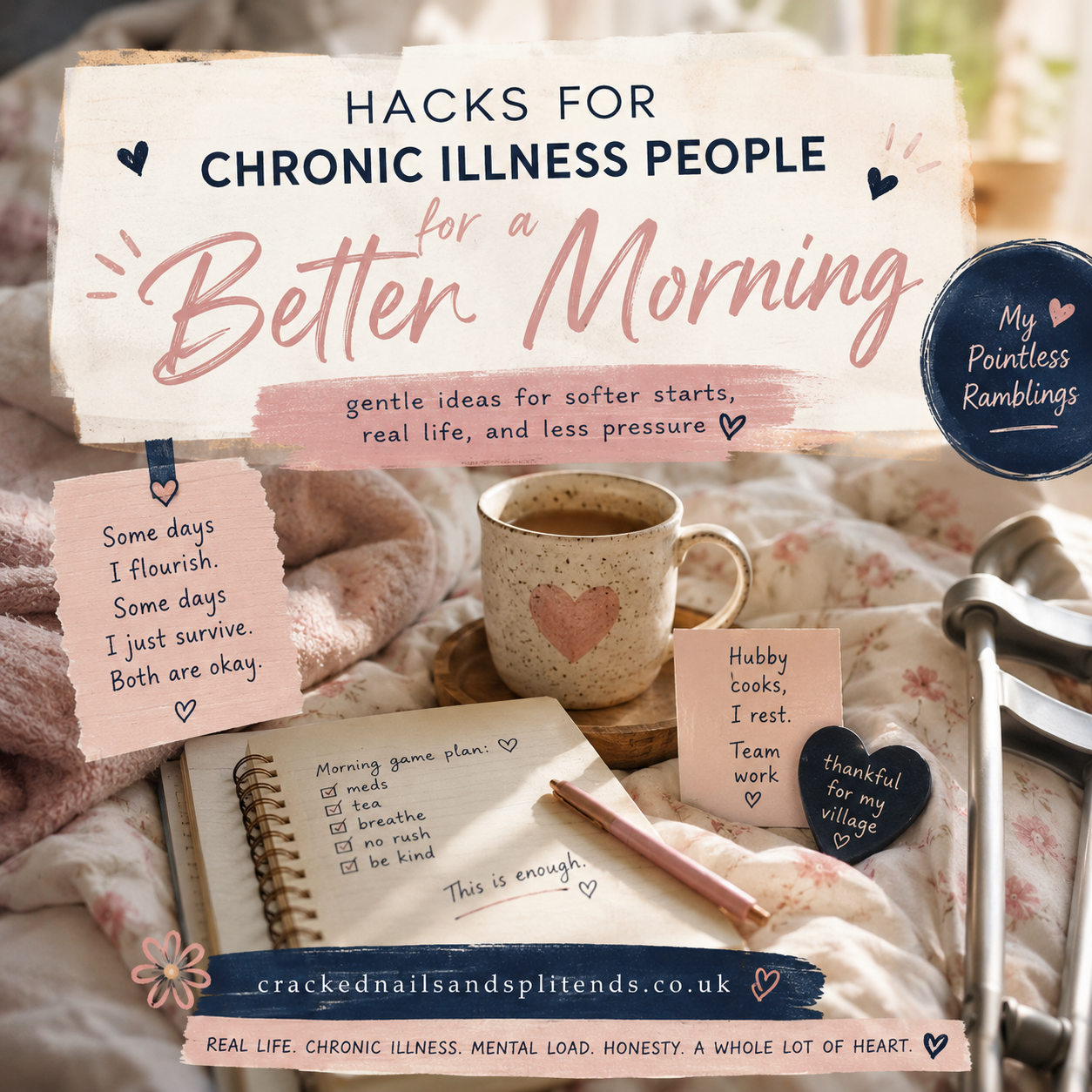
Mornings… If you're living with a chronic illness, you probably already get just how much that first part of your day can set the tone for everything else. And by 'start,' I'm definitely not talking about bouncing out of bed at seven, all energised with a green juice and a run. Nope. I mean that foggy, heavy feeling, always running straight into pain.
For ages, I used to think that having rough mornings meant I was just messing up somehow. Like if I just put in more effort, got better sleep, did more planning, or was just generally more disciplined, I'd eventually wake up feeling, you know, 'normal.' Here's the kicker: that kind of thinking only ended up making everything feel worse. What really started to help was when I finally accepted that my mornings just have to be different. It was about learning to build them with my body, instead of always trying to fight it.
Now, these aren't some magic fixes or fancy productivity hacks. Instead, they're just small, real-world adjustments that can make your mornings a bit gentler, easier to handle, and less exhausting. See them as little allowances you get to make for yourself. Because, honestly, you deserve to kick off your day with a bit more ease.
1. I keep everything I need within arm’s reach
My bedside table? That's basically my command center. Medications, water, some hard candies, snacks, lip balm, my heating pad, glasses – truly, anything I might possibly need before I even think about getting on my feet, it's all right there.
This really cuts down on how many decisions and movements I need to make when my body is feeling its absolute worst. Some mornings, just the act of sitting up can feel like I'm trying to scale a mountain. So, if I can drink some water, take my meds, and just generally get myself settled before I even try to get out of bed, well, that already feels like a win.
2. I treat getting out of bed as a multi-step process
I used to just think 'getting up' was one single thing you did. But now? I know it's a whole series of steps.
First, you wake up.
Then, you take your meds.
After that, you sit up.
Next, you put your feet on the floor.
Finally, you stand.
I make sure to pause after each one. I really check in with my body between those steps. Feeling dizzy? Is the pain flaring up? A wave of exhaustion hitting? If any of that's a yes, then we just wait. There's no medal for rushing things only to completely crash five minutes later.
And you know, there are simply some days when getting out of bed just isn't happening. The dizziness won't let up, the pain feels impossible to bear, and my legs just refuse to hold me. On those days, my body pretty much makes the call for me, and I've really learned to pay attention.
3. I plan for a “low-spoons” morning by default
Even on mornings that feel okay, I generally just assume my energy will be pretty low when I first wake up. So, that means planning for simple breakfasts, making sure my clothes are comfy, and really keeping any expectations about getting stuff done super low until my body has a chance to settle.
If I happen to feel better than I thought, that's wonderful. If not, I'm already in a good spot to just manage things, rather than feeling let down. Planning for a lower capacity isn't about throwing in the towel; it's just about being real with myself and showing a little kindness.
4. I have a “uniform” for mornings
Decision fatigue? Oh, it's absolutely a real thing, especially when you're dealing with pain or that persistent brain fog. I've really streamlined my morning clothes into a small set of soft, easy-to-wear, sensory-friendly outfits – think mostly pajamas and comfy loungewear.
No tight waistbands. No fabrics that feel scratchy. And absolutely none of that 'it looks good but it's agony to wear' stuff. When my body is already feeling overloaded, comfort isn't just an option; it's a must.
5. I don’t check messages or news right away
This, for my mental health, was a complete game-changer. Mornings are usually when I'm feeling most exposed, both emotionally and physically. Hearing bad news, getting stressed-out messages, or just feeling the pressure of other people's urgent needs can seriously mess up my whole day before it's even really begun.
I make sure to give myself a bit of a buffer, sometimes just 30 minutes, other times it's even longer, before I connect with anything from the outside world. My body always gets my attention first.
6. I build in one tiny comfort ritual
It doesn't need to be something aesthetic or perfect for Instagram, not at all. For me, it could be a warm cup of matcha, putting on a favorite playlist, doing my make-up, or even just using a scent I really enjoy.
That little bit of comfort sends a signal of safety to my nervous system. It's a reminder that even if the day ahead is going to be tough, there's still a gentle moment waiting there for me.
7. I forgive myself for bad mornings
This might actually be the most important piece of advice from the whole list. Some mornings are just plain bad. And honestly, no amount of planning or self-care is going to magically fix them. That's not a sign that you've failed personally.
I make a point not to see a rough morning as proof that I'm lazy, or broken, or somehow falling behind in life. Instead, I remind myself: 'This is just part of living in this body.' Trying to fight against that reality usually just makes everything hurt even more.
If you're living with a chronic illness, you really don't need to feel like you have to conquer your mornings. You don't need to streamline them into some kind of flawless routine. What you do need is to simply get through them with a bit less pain, a bit less shame, and a little more gentleness.
Your morning doesn't have to look impressive to anyone. It just needs to work for you. And that, in its own quiet, imperfect way, is absolutely more than enough.
About me
I am a married mother of four children. One of those four children is our granddaughter, for whom we are SGO (legal guardians)/kinship carers. I run a small business and enjoy writing, so I blog. My blog focuses on my family life as well as my experiences of living with chronic illnesses and disabilities such as ME/CFS, spinal stenosis, chronic pain, and fibromyalgia. Oh, and I am only in my mid-40s.
If this post resonates with you, you might also enjoy some of my other honest chats about life with chronic illness. I’ve written about things like appointment fatigue, the mental load that comes with being unwell, and learning the art of letting go when your body forces you to slow down. My My Pointless Ramblings series is also filled with reflective, relatable posts about overwhelm, exhaustion, and navigating everyday life while chronically ill. Sometimes it just helps to feel a little less alone in it all. 💛
Frequently Asked Questions
Why are mornings harder with chronic illness?
For many chronically ill people, mornings come with increased pain, stiffness, fatigue, dizziness, or brain fog. It can take time for the body and nervous system to fully wake up, which is why gentler, slower mornings can help.
How can I make mornings easier with chronic fatigue?
Giving yourself extra time, keeping essentials nearby, reducing decision-making, and avoiding rushing can make mornings feel far more manageable when living with chronic fatigue.
Is it normal to struggle getting out of bed with chronic illness?
Yes. Many chronic illnesses affect energy levels, pain, mobility, sleep quality, and nervous system regulation, which can make simply getting out of bed feel exhausting.
What are some gentle morning routine ideas for chronically ill people?
Simple things like taking medications slowly, stretching gently, drinking water or tea in bed, listening to music, and planning for low energy mornings can all help create a softer start to the day.
How do I stop feeling guilty about slow mornings?
Living with chronic illness means your body has different needs. Slow mornings are not laziness or failure. They are often necessary for managing symptoms and protecting your energy.